
A care operation that never loses the thread.
Amsta supports thousands of clients across residential care, home care and specialist services in Amsterdam. Cloud Integrate replaced fragmented records, Excel waitlists and manual compliance with one connected platform on Salesforce Service Cloud.
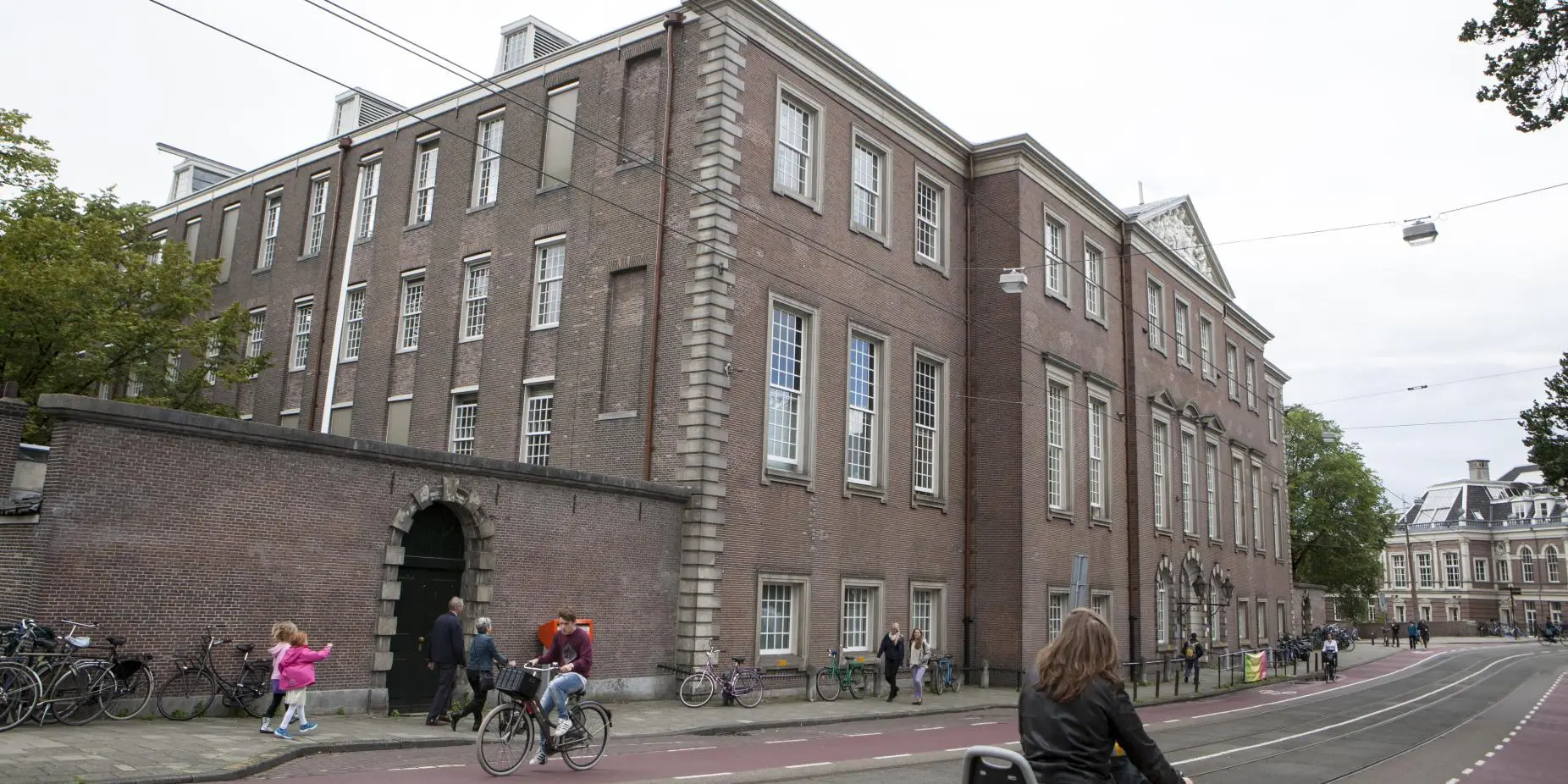 Amsta · Sarphatihuis, Amsterdam
 Care quality is information quality.
Amsta is one of Amsterdam's largest care organisations. At that scale, the quality of care depends entirely on the quality of information available to the people delivering it. Every coordinator, every professional and every team involved in a client's journey needs an accurate, complete picture of who that client is, what they need and what has already happened. Amsta did not have a system that could provide it.
Four ways the thread kept breaking.
Knowledge lived in people, not systems.
Every client journey was carried in a coordinator's head: process stage, document status, family contacts, placement history. Context was rebuilt manually at every client switch, and matching a client to the right location required months of accumulated portfolio knowledge that existed nowhere in a system. New employees could not perform effective intake without extensive knowledge transfer from colleagues already stretched across their own caseloads.
Every vacancy was a surprise.
Waitlists were managed in Excel and personal records, with daily mutation checks against the ECD performed by hand, error-prone and easily missed. Facility management only learned of a vacancy after move-out, so every unit turnaround began as an emergency with no lead time. Units sat empty while families on the waitlist waited.
Families waited in silence.
During often lengthy waitlist periods, families received no updates, and every interaction meant re-explaining their situation from the beginning. When placement finally came, medical records were requested at the last moment, leaving families collecting documentation under time pressure during an already emotionally demanding transition.
Compliance carried structural risk.
Sensitive health data lived across paper, Excel and email without access controls, encryption or audit logging, leaving Amsta structurally non-compliant with NEN 7510 and the GDPR. Assembling evidence for a regulatory inspection took days of manual preparation, with no guarantee something critical was not missing.
Every unit turnaround began as an emergency, because intake and facilities could not see each other.
One record. One process. One platform.
Cloud Integrate implemented Salesforce Service Cloud as Amsta's unified care management platform. Every client now has one complete record: care application, family contacts, involved organisations, collected documents, full communication history and current process stage, accessible to every authorised professional across every care setting. An automated matching system surfaces eligible locations based on assessed needs and guides new and experienced employees through the same structured process. The knowledge that lived in individuals now lives in the platform.
Waitlist management moved from Excel to a structured, real-time system. Bed availability is detected automatically, and transfer flows trigger downstream processes the moment a move-out is registered: the unit flagged, the inspection initiated, facility management notified with days of lead time. Families follow a structured journey through the waiting period, with facility information, practical guides and updates delivered gradually, and medical data requested predictively a month before estimated availability. Health data is protected with AES-256 encryption at rest, permission-based access controls and full audit logging, with compliance dashboards giving continuous visibility into incident closure, access coverage, breach response and complaint handling.
| From | To |
|---|---|
| Client journeys carried in coordinators' heads | One complete record for every client |
| Waitlists in Excel, checked against the ECD by hand | A real-time waitlist with automatic bed-availability detection |
| Unit turnarounds starting as emergencies | Days of lead time from the moment a move-out is registered |
| Families re-explaining their situation at every contact | A structured journey that keeps families informed through the wait |
| Days assembling inspection evidence by hand | Audit answers as a report, not a search |
From reactive to continuous.
Coordinators now work from a complete, shared, real-time picture of every client. A new employee follows the same guided process as an experienced one, and continuity of care no longer depends on whether the right person happens to be available. Bed turnaround is tracked from vacancy to placement, with average days empty, days lost to delays and the financial equivalent of downtime visible per location, making revenue leakage measurable and manageable for the first time. Families arrive at placement informed and prepared rather than starting from scratch.
Not surviving inspections. Never needing to fear them.
Not sure where to start?
A free scan with a senior consultant will tell you, with no obligation.